

Six months ago, a newsletter creator I respect told me he had finally cracked the code on his weekly production. He had set up a Custom GPT trained on his archive. He had a routine. He could ship the whole issue in ninety minutes.
I asked him how the issue was actually doing.
He paused. The open rate had dipped a little. Replies were down. One reader had emailed to ask if he was still writing the newsletter himself.
The system worked exactly as designed. He was writing faster. He was also losing the relationship that made the writing worth doing.
That conversation kept returning to me this week, while HeyNews finished eighth on Product Hunt in a launch that felt like the close of a year of quiet work. The launch story that comes most naturally is the fast one. We can give you back your Sunday. That story is true and worth telling. It also leaves a more interesting question buried.
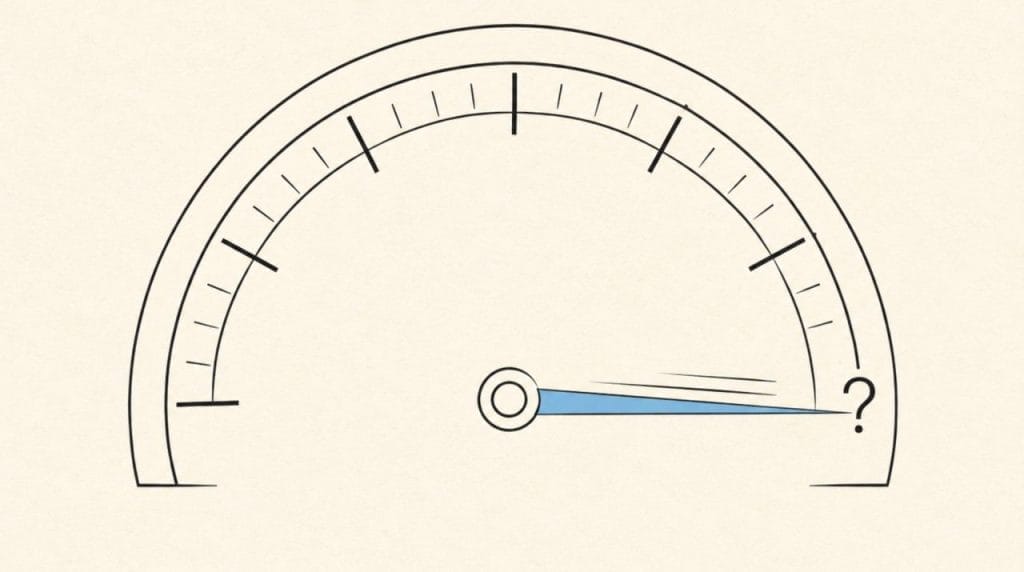
Cagri made the architectural case earlier this week. The man knows his math. Behind the math is a question worth asking before any newsletter creator hands their workflow to a tool. Faster, toward what?
Why “Write Faster” Became the Default Answer for Newsletter Creators
Look at how the conversation about AI and work currently sounds.
The Microsoft and LinkedIn 2024 Work Trend Index, a survey of 31,000 knowledge workers across 31 countries, reports that 75% of global knowledge workers now use AI at work. Of those users, 90% say AI saves them time. The dominant headline number is time. The dominant promise is speed. Every productivity newsletter, every vendor pitch, every Tuesday morning opinion essay about generative AI orbits the same claim. The work goes faster.
Newsletter operators are knowledge workers. The same headline is also our headline. Write faster. Curate faster. Format faster. Ship faster.
The reason creators believe the headline is that the math behind it is honest. Production is exhausting. The hours add up. Cagri walked through the 124 annual hours newsletter operators spend on source monitoring alone in our first issue. When a tool offers to cut those hours in half, the offer is real, and accepting it is rational.
What goes missing is the second question. Time saved, but spent on what?
Look at any newsletter that has slowly drifted from a publication you loved into one you only skim. The drift was rarely caused by the writer working harder. The drift was caused by the writer working faster, on more issues, with less room around each one for the things that turned the publication into yours in the first place.
The numbers do not lie. The numbers also do not tell you what they were measuring on your behalf.
Speed was a useful proxy when it was a side effect of clear thinking and tight craft. Speed becomes a problem the moment it gets promoted from side effect to target. Once that promotion happens, every tool and every workflow starts optimizing for it, and the variables it was once tracking quietly stop being measured at all.
You feel it before you see it. The Tuesday morning when the issue arrived on time and read like a stranger had written it. That feeling has a name. That name has a body of research behind it.
When Speed Becomes the Target, It Stops Being a Good Measure
There is a rule from outside the newsletter world that explains this with terrible precision.
The British economist Charles Goodhart first described it in a 1975 paper on monetary policy. The anthropologist Marilyn Strathern, writing in a 1997 paper on accountability in British universities, gave it the compact form everyone now quotes. When a measure becomes a target, it ceases to be a good measure.
The rule survives because it is depressing in every domain it touches. Teach to the test and exam scores rise while learning falls. Pay engineers by lines of code and the codebase fills with bloat. Reward call center agents for short calls and the customers stop getting their questions answered. The measurement breaks because the moment you tie a reward or a tool to a single number, the system finds the cheapest path to that number, and the cheapest path is rarely the path the measure was originally tracking.
Newsletter creators have spent the past two years promoting speed from side effect to target. Tools were built around it. Workflows were redesigned for it. The Sunday Slack channels of creator communities are filled with prompts and templates dedicated to it.
And the readers started to notice that something else was being measured less.
You are not alone in feeling this. Every creator we have talked to over the past year describes some version of it. The first time you generate a draft in twelve minutes, the result feels like a small miracle. The third time, it feels efficient. The tenth time, you cannot remember which week it was that the substance went quiet. The work kept moving. The relationship did not.
Speed was a side effect of clear thinking. The newsletter tools that turn it into the only measurable variable are training writers to lose the thing the measure was tracking on their behalf.
The Strathern reframe is the part most operators miss. The thing tools were originally tracking, before speed got promoted to a goal, was the chance of producing a publication your readers would still recognize as yours in issue 200, written at a pace you could sustain across the years required to reach issue 200. Speed was downstream of those two things. Optimizing speed upstream of the work that produces it puts the whole publication at risk.
What the Creativity Research Actually Says About Time Pressure
Slowing down has serious research behind it.
Teresa Amabile spent decades at Harvard Business School running one of the longest field studies on creative work in organizations ever conducted. In a paper called Creativity Under the Gun, published in the August 2002 Harvard Business Review, she and her coauthors Constance Hadley and Steven Kramer analyzed the daily diaries of 177 knowledge workers across seven companies and 26 creative project teams. Their question was simple: Does time pressure help creativity, or hurt it?
The answer was unflattering to anyone who has ever told a team to ship faster.
On most days under high time pressure, creative thinking went down. The exception that proved the rule was telling. Creative thinking under pressure was unlikely when workers felt like they were on a treadmill, doing reactive work with fragmented attention. Creative thinking under pressure was much more likely when workers felt like they were on an expedition, doing meaningful work on a clear mission with protected focus.
The framing matters. The same number of hours in the same week could produce dramatically different work, depending on whether the writer felt rushed through the work or engaged with it.
Newsletter creators know this intuitively. The issues you are most proud of were almost never the issues where you found a productivity hack that saved you forty minutes. They were the issues where you noticed something nobody else had noticed, and you had the time to sit with that noticing until it became a paragraph that mattered.
This is the kind of work that does not transfer to a generic AI writing tool by accident. The transfer requires deliberate design.
A more recent study makes the point with sharper math. Navigating the Jagged Technological Frontier, a 2023 field experiment by a team of researchers from Harvard, Wharton, MIT Sloan, and Boston Consulting Group, ran 758 BCG consultants through 18 realistic consulting tasks, with and without GPT-4.
The results inside what the researchers called the AI’s “frontier” were every bit as impressive as the productivity headlines suggest. Consultants using AI completed 12.2% more tasks, 25.1% faster, and produced output rated 40% higher in quality.
Outside that frontier, the consultants using AI were 19% less likely to produce correct solutions than the consultants working without it.
Read that sentence twice.
On tasks outside the frontier, the AI did more than fail to help. The output actively pulled the work in the wrong direction. The consultants using AI did worse than the consultants who got no help at all.
The newsletter implication is uncomfortable. AI can speed up some parts of newsletter production beautifully. The same AI can quietly degrade other parts, especially when speed is the only metric the operator is watching. The work changes from going faster to knowing which parts of the workflow sit inside the frontier where speed buys you quality, and which parts sit outside it, where speed costs you the work.
Generic AI tools do not draw that line for you. The line is yours to draw, every Sunday morning.
What Is the Right Goal for Newsletter Writing Today?
Cal Newport published a book in March 2024 called Slow Productivity, built around three principles that read like a quiet rebellion against the entire productivity industry. Do fewer things. Work at a natural pace. Obsess over quality.
The principle that travels worst out of corporate knowledge work and into newsletter publishing is the second one. Newsletter creators have a schedule. The schedule is the contract. Telling a Tuesday morning subscriber that the issue will arrive when the writing feels ready is unsustainable.
The principle that translates almost too easily is the third. Obsess over quality.
The first is the one most newsletter operators have never been given permission to take seriously. Do fewer things.
What Newport names as the diagnosis behind the three principles is the concept that ought to be a hanging poster in every newsletter operator’s workspace. He calls it pseudo productivity. The use of visible activity as a crude proxy for actual productive effort.
Pseudo productivity in newsletters looks like the writer who ships every Tuesday, no matter what, regardless of whether the issue has anything to say. It looks like the creator who optimizes the Sunday production stack until they can move from outline to send button in ninety minutes, while the substance of the work quietly evaporates. It looks like the operator who measures their newsletter career in issues shipped, when their readers measure it in issues remembered.
The real goal of newsletter writing was always that the issue arriving in your reader’s inbox carries something they could only have gotten from you. Speed was a useful side effect when the writer was operating in expedition mode. Speed becomes the enemy of the work the moment it gets confused with the work itself.
This is where the choice of tool stops being an efficiency question and starts being an identity question. A tool that optimizes only for speed will save you minutes and slowly cost you readers. A tool that optimizes for voice and lets the speed follow as a side effect saves you those same minutes without erasing the relationship that made the work matter.
I wrote about the editorial substance gap a couple of weeks ago, and this is the operational version of the same argument. The substance gap is what happens when speed is the only metric. Closing the substance gap is what happens when speed becomes a side effect again.
Where Should the Freed Hour Actually Go? Three Better Places to Spend It
Telling a newsletter creator to “stop chasing speed” is a slogan. The actionable version is harder.
If your tools and your workflow do free up an hour of your Sunday, that hour does not have a default destination. The hour will be spent on something. Without a deliberate decision, the world will decide for you. Usually the world chooses one of three defaults. Another issue. More social posting. Scrolling. None of those will improve the publication.
Here are three places newsletter creators consistently underspend, and where I would suggest pointing the next freed hour.
One source you would not normally read. Most newsletter operators have a working source loop of about a dozen places they check every week. The loop is efficient. The loop also produces convergent thinking, because every creator in your niche has overlapping loops, and the same stories surface in everyone’s drafts on Tuesday morning. The most original issues you will ever write begin with a source nobody else in your category has read this week. Spend the freed hour finding one. A book chapter. A podcast outside your industry. A long essay from a domain you do not normally cover. A subreddit you have never visited. The signal compounds. The compounded signal is what your readers will eventually call your perspective.
One subscriber reply you would not normally answer. The parasocial bond at the heart of newsletter publishing runs both ways, though the analytics dashboard makes it look one sided. The replies are the medium of the actual relationship. Most operators triage them ruthlessly because triage feels necessary at the volume. Spend the freed hour on a handful you would normally have skipped, especially the long ones, especially the ones from readers who have been with you for two or three years. The information you learn there changes what you write next. The information also changes how your readers feel about your presence in their inbox. There is a Tuesday morning a year from now when one of those replies will turn out to be the seed of the issue that breaks your biggest week.
One sentence you would normally accept. Every issue has a sentence the writer suspects could be sharper, and that gets shipped anyway because the deadline did not allow for the rewrite. That sentence is where the difference between competent and memorable usually lives. Spend the freed hour finding it in this week’s draft and rewriting it three times until one version stops you when you read it again. The first ninety percent of your draft can be average. The one sentence per issue you refused to compromise on is the part your readers will remember six months later.
None of these activities feels productive in the conventional sense. None of them shows up on a production timeline. All three are works that were getting starved when speed was the only measure.
The deliberate redirect is proof that the productivity gain was real. Hours freed without a redirect plan are hours absorbed by busyness, and the publication ends up exactly where it would have ended up without the tool.
What This Launch Week Has Actually Been About
On Tuesday morning we opened HeyNews to the public. The Product Hunt run ended with the platform in eighth place for the day, sitting alongside builders we have respected for years. The launch was the close of a year of work, and a quiet thank you to the operators who already trusted us with their archives during the long period of testing I wrote about last week.
There was a version of the launch I was tempted to lead with. The fast version. We can give you back your Sunday afternoon. The math is real. We have the testimonials.
That version is true. It also misses the point of why we built the thing in the first place.
We built HeyNews to remove the parts of newsletter production that were preventing creators from being where they actually wanted to be. The aim of the platform was that you publish in a way that did not cost you the relationship at the center of your work. Speed alone was never going to be the proof. This is how HeyNews works instead. The voice profile reads your archive. The AI Writer drafts in your patterns. The mechanical layer of the workflow steps back so the writer can step forward.
What you do with the freed hour is yours. We do not have a hot take on whether you should spend it on a deeper source loop, a longer subscriber thread, or a single sentence you finally have time to fight with. The freed hour is the actual product. The draft is the proof that the freed hour was earned without erasing your voice.
Sit with the question this week. Faster, toward what?
That is the only newsletter productivity question that has ever mattered.
It All Comes Down To…
- The dominant claim of the AI productivity era is time savings. The Microsoft and LinkedIn 2024 Work Trend Index, based on a survey of 31,000 knowledge workers across 31 countries, found that 90% of AI users say the tools save them time. The question the headline buries is what the saved time is spent on, which determines whether the speed gain becomes a quality gain or a quality loss.
- Goodhart’s Law, in Marilyn Strathern’s 1997 phrasing, explains why speed has become a problematic measure for newsletter publishing. Once a side effect of good craft gets promoted to a target, tools optimize for the target and quietly stop tracking the variables that mattered.
- Teresa Amabile’s Creativity Under the Gun diary study of 177 workers across seven companies and 26 creative project teams showed that time pressure suppresses creative thinking when workers feel on a treadmill, and supports it only when workers feel on a mission. The burden falls on workflow design, not personal grit.
- Dell’Acqua and colleagues’ Jagged Technological Frontier field experiment with 758 BCG consultants found that GPT-4 produced 25.1% faster work and 40% higher quality inside the AI’s frontier, and 19% lower correctness outside it. AI tools do not produce uniform speed gains. Knowing which parts of newsletter production are inside the frontier and which are outside it is the operator’s job.
- A practical reframe of the freed hour follows from Newport’s pseudo productivity concept. Redirect the next freed hour to one source outside your normal loop, one subscriber reply you would have skipped, and one sentence you usually ship without rewriting. These three buckets are where most newsletter quality actually compounds.
Annie Dillard, writing in The Writing Life in 1989, left a line that has stayed with writers for over thirty years. How we spend our days is, of course, how we spend our lives.
For newsletter creators, the version that matters reads slightly differently. How you spend your Sunday afternoon is how your readers experience your Tuesday morning. The tool you use, the goal you optimize for, and the variables you decide to protect from optimization are all the same decision wearing three costumes.
The publications that ask the right question this year, and answer it carefully, will still be in your readers’ inboxes in 2030. The publications that chase speed for its own sake will already feel like strangers by the end of next quarter, even to their own readers.
Faster was the wrong answer because it was the wrong question. Toward what is the question the next decade of newsletter publishing is going to ask you.


