

There is a reader you have probably already lost without noticing.
She used to reply most weeks. Then the replies thinned out. You checked the list, half worried. She was still subscribed. She had simply stopped opening.
You changed nothing you can name. Same morning, same topics she signed up for. A few weeks back, you let the model write the first pass to rescue a tired Sunday. The drafts came out clean enough to ship. So you shipped them.
She never wrote to say anything was wrong. Nothing was, exactly. Something just sat slightly off.
The uncanny valley of AI writing is where good enough quietly costs you subscribers, and you have probably been living in it without knowing.
What Is the Uncanny Valley, and Why Does It Live in Your Writing?
In 1970, a Japanese roboticist named Masahiro Mori noticed something strange in how people respond to machines built to look like us, and he drew it as a curve. As a robot grows more humanlike, our affinity for it climbs, the way you would expect. Then, at the point where the robot is almost human and just short of it, the curve falls off a cliff. Affinity collapses into unease. Mori called that dip bukimi no tani, and it reached English as the uncanny valley.
His own example was a prosthetic hand. At a glance, it passes for real. Then you shake it, and it is cold, and the grip is wrong, and the thing you took for a hand turns eerie inside your own. Mori added a second observation that matters here. Movement makes the valley deeper. A still wax figure unsettles you. A wax figure that moves is worse, because motion raises your expectations and then breaks them.
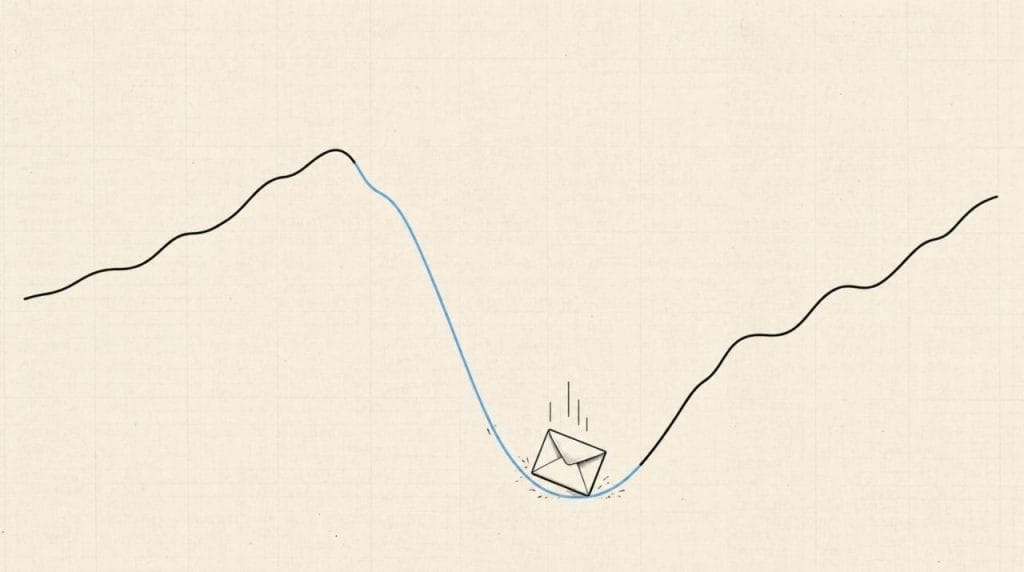
That detail travels straight into writing. A single bland sentence barely registers. A whole issue that moves the way you move, opens the way you open, carries your section rhythm, and then thinks in a register that is not yours, that is the version that unsettles a regular reader. The more of your surface the draft gets right, the louder the missing center rings.
For fifty years, this stayed a conversation about faces. Robots, wax museums, the animated characters in films that made audiences squirm without knowing why. Then generative AI learned to write, and the valley moved into prose.
The novelist and writing teacher John Warner felt it on himself. He fed his own published columns into a bot and asked it to write in his voice. What came back resembled his work and was off in ways that, by his own account, pushed past resemblance into something close to revulsion. The bot had caught a few of his habitual phrasings and missed the person underneath them. He had walked into a textual version of Mori’s valley, assembled out of his own sentences.
Your readers stand at the edge of that curve every week. They carry a sense of your hand. When a draft arrives shaped like you and cold to the touch, the wrongness stays silent. It surfaces only as a small, unplaceable discomfort that they could not explain if you asked.
Your readers built a model of you without meaning to, and every issue either confirms that model or quietly breaks it. Good enough is the sound of it breaking.
That is the valley. Most operators wander into it by accident, on the weeks they have the least left to give.
Why “Good Enough” Is the Most Dangerous Place to Land
Here comes the counterintuitive shape of it: Writing that’s obviously machine-made barely dents you, because nobody mistakes it for you. Writing that is fully, recognizably yours leaves you untouched, because it is the thing they subscribed for. The damage lives in the narrow band between the two, where the draft is competent enough to carry your name and hollow enough to feel borrowed.
The model is engineered to land you there. It’s trained to produce the smooth, agreeable, broadly acceptable middle of everything it has ever read, and that middle sits right on the lip of the valley.
The cost reaches past taste, and we know that because someone measured it. In 2016, researchers Maya Mathur and David Reichling ran eighty real robot faces past human raters and found the valley sitting plainly in their likability scores. Then they did something sharper. They placed those same faces inside an investment game, where trusting your partner meant risking real money. The valley followed the money. Faces in the uncanny zone were trusted less, in a choice that cost the truster something to get wrong. The eeriness ran deeper than a surface reaction people could wave off. It reached down into whether they were willing to rely on the thing in front of them.
A draft from a generic model reads like an impersonator who studied you on video for an afternoon and never once heard you laugh. The mannerisms are present. The timing is wrong.
Now move that into an inbox. A newsletter is an investment game your reader plays every week, and the currency is attention, the one resource they never get back. When your issue lands in the valley, the reader files no complaint. They lower the stake. They skim where they used to read. They archive where they used to reply. The trust that took fifty issues to build starts leaking through a crack nobody can point to.
None of those moves feels like a decision to the reader. Each one is a tiny, automatic flinch away from something that did not quite fit, repeated across a few issues until skimming becomes the default and opening becomes optional. By the time the pattern is visible to you on a chart, it has already been a quiet habit of hers for a month.
The draft that gets close enough to wear your name is more dangerous than the one that obviously cannot. Your readers forgive a robot. They leave a stranger wearing your face.
Cagri made the visual version of this argument earlier this week, about the way a drifting color value or a shifted header makes an issue feel subtly unlike the last one. The words sit on the same fault line. A reader feels a sentence that is shaped like yours and thinks, unlike you, the same way they feel a gray that crept a little too blue.
Why Your Readers Feel It Before They Can Name It
Ask a reader why they drifted and the answer, if it comes at all, is that the issue “felt off.” The words “uncanny valley” never enter their mind. The feeling arrives ahead of the explanation, and there is a reason for that order.
Your brain is a prediction engine. It runs ahead of each moment. It guesses what is coming and checks the guess against what lands. In 2018, neuroscientists Burcu Urgen, Marta Kutas, and Ayse Saygin recorded what happens in the brain when that guess fails on a humanlike target. They showed people a human, a mechanical robot, and a realistic android that looked human and moved like a machine, while measuring the brain’s electrical activity. The android, the in-between case, produced a spike; the other two did not. The signal was the brain’s signature for a prediction error, the same jolt it throws when a sentence ends on a word you didn’t see coming. The almost human input broke the model the brain had already built, and the break registered as discomfort.
Picture what your regular reader is running. Across fifty issues, their brain has assembled a quiet, detailed forecast of you. The way your sentences tend to turn. The idea you reach for second. The joke you would risk and the one you would never. They do not know they hold this forecast. They notice it only when something snaps it.
You have felt the inverse yourself. There are writers whose next sentence you can almost finish, because you know them that well. That finishing reflex is the forecast working. A near-miss draft trips it.
The forecast is exact, down to the texture of your transitions, the length of your typical aside, the two or three words you overuse that your readers have quietly come to read as warmth. When a draft keeps the topic and swaps that texture, the forecast misfires on every line, the way a familiar song played a half step flat sounds wrong long before anyone can name the note. The reader never identifies a wrong note. They just stop humming along.
This is why controlled tests miss the real threat. In a lab, readers identify machine-written text only about half the time, as I covered in the voice contract piece, because they are judging two strangers on equal footing. Your reader is NOT in a lab. They are holding this week’s issue against the version of you they carry everywhere. The benchmark is recognition, and recognition fails long before detection does.
A reader can feel your absence without ever catching the machine. Their body keeps a score your dashboard never prints.
There is a crueler turn. Once that felt wrongness hardens into suspicion, the suspicion stops checking its facts. Researchers found that simply labeling a headline as AI generated lowered how accurately and trustworthy people judged it, whether the headline was true or false, written by a human or a machine. The penalty rides on the perception and ignores the reality entirely. So a reader who has begun to suspect you can dock you for an issue you wrote by hand, on one of your best weeks, because the suspicion arrived first.
Uncomfortable? Good. That discomfort is the sound of you still caring what arrives in their inbox.
Does “Good Enough” Actually Cost You Subscribers?
It does. The way it costs you is the part that makes it dangerous, because it never looks like a cost.
What the reader from the top of this piece did leaves no trace. She stopped opening and stayed subscribed, a number that still counts on your dashboard while meaning nothing underneath. A loud unsubscribe would have been a mercy, because anger tells you where you stand. Silence tells you nothing until the relationship is already gone.
You can almost watch it happen in slow motion, if you know where to look. The open lands a few hours later than it used to, then a day later, then only on the weekend, then not at all. Four data points that each read like a busy week on her end. Stacked together, they are a goodbye she never sent.
Thus, the silence turns expensive. Mailbox providers decide whether you reach the inbox or the spam folder partly by watching engagement. Opens, clicks, replies, the signals that say a human on the other end wants this. When a slice of your list goes quiet, those signals weaken, and the system begins routing you toward the promotions tab and the spam folder for your whole list, well beyond the single reader who drifted.
Since February 2024, Gmail and Yahoo have backed this with hard numbers. Your spam complaint rate has to stay under 0.3%, which is three taps of the spam button for every thousand messages you send. On a list of ten thousand, thirty irritated readers can begin to wall you off from the inbox you spent years earning your way into.
Let the quiet of that land for a second. The issue that was only good enough costs you more than the one that the reader noticed. It can cost you the inbox itself.
And finally, comes the saddest mechanism in the whole chain. The reader who quietly drifted will never see the issue where you finally sound like yourself again. By the time you climb out, you are landing in her promotions tab unopened, sitting beside a coupon she will also never read. The relationship closed in silence, on a Tuesday nobody marked on a calendar, with no fight to remember it by.
Trust in a newsletter behaves the way trust behaves everywhere. It builds one reliable issue at a time, slowly, and it leaves all at once. You spent fifty Tuesdays earning the benefit of the doubt. A handful of good enough issues can spend it. The withdrawal goes unannounced because she is barely aware she is making it.
The most expensive issue you will ever send is the one that was good enough to publish and a half step short of sounding like you.
How Do You Keep AI From Making Your Newsletter Sound Generic?
The instinct, once the valley makes sense, is to push the writing to sound more human. Add warmth. Sprinkle in personality. Tell the model to “be more conversational.” Every one of those moves digs the hole deeper. Generic warmth is still generic. You are smoothing the android’s face to look friendlier, and the friendlier it gets without becoming you, the deeper into the valley it slides.
The way out runs forward, toward your actual specificity. The model has to stop predicting the average human and start predicting you. Remember the prediction engine in your reader’s head, the one running a detailed forecast of how you turn a sentence. A draft climbs out of the valley the moment it confirms that forecast instead of breaking it.
You can locate your own valley this week with a test that takes twenty minutes. Call it the Prediction Test.
Take a recent issue you wrote yourself entirely. Have a friend who reads you, or yourself after a week away from it, cover the back half of five sentences and guess how each one ends. Count the guesses that land. Now run the same test on a draft the model wrote for you. The pattern tends to be stark. Your own sentences resist the guess. You pivot somewhere the reader did not expect, reach for the reference nobody saw coming, end on the line a reader would screenshot. The model’s sentences finish the way the reader guessed, because predicting the likely next word is the whole of what the model does. The higher the guess rate, the deeper in the valley you sit. Guessable is what “off” feels like, finally measured.
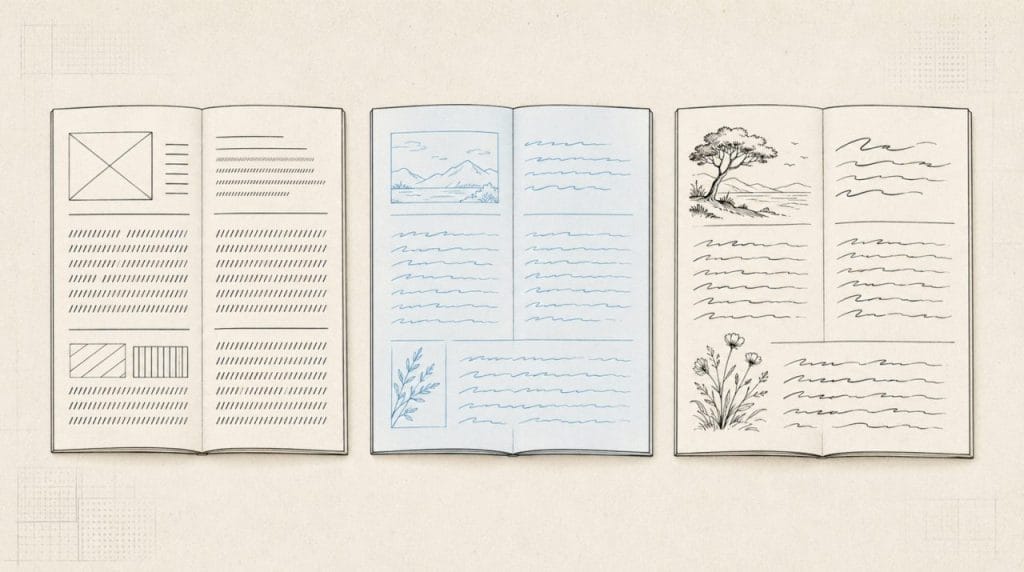
Once you can see the guess rate, you can aim. More editing passes on a generic draft only smooths the same average and leaves you exactly where you started. The move that works is changing what the draft is built from, so the raw material already carries your swerves before you touch a single line.
This is the design problem worth solving well. A model trained on the average of the internet predicts like the average of the internet, so it lands in the valley by default. A model that learns from your archive picks up how you specifically break a pattern, which is the one move the generic version can never fake. HeyNews was built on that distinction, as an AI newsletter generator trained on your archive rather than the average. Your voice already exists, laid down across every issue you have published, swerves and risks included. The writer learns from your patterns, so the draft predicts the way you predict, and you stay on the human slope of the curve where your readers still recognize you. You keep the final say on every line. The labor moves off your plate. The recognition stays with it.
It All Comes Down To…
- The uncanny valley is the narrow band where writing is competent enough to wear your name and hollow enough to feel borrowed. Obviously, robotic writing is safe, and fully recognizable writing is safe. Good enough is the pit in between.
- Readers feel the wrongness before they can name it, because their brain runs a forecast of you built across many issues, and a near miss draft sets off a prediction error they experience as a vague discomfort.
- The cost stays quiet. Readers disengage without unsubscribing, and weakening engagement can push your whole list toward the spam folder under the Gmail and Yahoo rules, so good enough compounds into invisibility.
- You can run the Prediction Test on your next issue with nothing but a friend and twenty minutes. The more guessable your sentences, the deeper in the valley you are. No tool required.
- Climbing out means writing toward your specificity, the swerves and risks an average can never produce, so the draft confirms the forecast your readers already carry of you.

The reader at the top of this piece is real in the way every reader is real. Someone who chose you, handed over the most guarded square of their attention, and waited for the version of you she signed up for to keep arriving. She left because the writing turned almost you, and almost is the one thing the relationship cannot survive.
Good enough was always the wrong target. Your readers were grading you against one standard the entire time. You. The work worth protecting is the small, strange, unpredictable specificity that no average could ever generate, the part of your writing that turns a stranger into a reader and keeps a reader from drifting.
See what editorial intelligence looks like when the writer learns your voice from your own archive. heynews.co


